Dramaturgie Forschung
← zurück
Prof. Dr. habil. Barbara Büscher
Dr. Franz Anton Cramer
Subverting
Archival
Practices
Unfolding Diversity in the Historiography of Performance-based Arts


PROJEKTBESCHREIBUNG (deutsch)
In den vergangenen zehn Jahren ist eine große Zahl an Archivnetzwerken, künstler-generierter Plattformen und informeller Zusammenschlüsse entstanden, die an kollaborativen Archivpraktiken arbeiten und neue historische Narrative im Bereich zeitgenössischer Aufführungskünste etablieren wollen. Ihr Ziel ist die Subversion bestehender Modelle durch eine Überschreibung herrschender Diskurse. Solche von Künstler*innen und Kurator*innen initiierten Prozesse des Dokumentierens, Bewahrens und Präsentierens von Arbeiten positionieren sich explizit jenseits oder in Opposition zu institutionellen Archiven und stützen sich in der großen Mehrzahl auf das Internet als zentrale Distributions-, Präsentations- und Zugangsplattform. Dieses Feld marginaler, nicht mainstream-orientierter und gemeinschaftlich betriebener Archivprozesse ist bislang wenig beachtet, fragmentiert und kaum sichtbar. Das Forschungsvorhaben widmet sich der zentralen Frage, ob und welche alternative (oder ergänzende, überschreibende) Strukturierungsverfahren, Arbeitsweisen und Entscheidungsformen diese Initiativen, Projekte und Plattformen tatsächlich entwickeln und ob dadurch eine nachhaltige Verschiebung im Feld der Aufführungskünste zu belegen ist. In einer Bestandsaufnahme werden unterschiedliche Praktiken des Sammelns, Dokumentierens und Präsentierens dieser Initiativen untersucht und wie sie zu mittlerweile geprägten Konzepten von an-archival practice, distributed archive und counter-archive stehen.
Die Leitfragen des Projektes sind:
- Wer sind die Akteur:innen? In welchen Räumen sind sie aktiv? Wie lauten ihre Mission Statements und an wen richten sie sich? Was ist die Organisationsform?
- Welche Arbeiten, Prozesse und Formate der Aufführungskünste, welche Hinweise auf historische, soziale und kulturelle Kontexte sammeln und bewahren sie?
- Werden auch Materialien zu den künstlerischen Werk-Prozessen archiviert, und in welcher Form? Welches Werkverständnis liegt zugrunde? Welche Formate der Aufzeichnung mit welchen medialen Referenzqualitäten kommen zum Einsatz?
- Welche Entscheidungskriterien und Auswahlverfahren kommen zum Einsatz und wie transparent sind sie? Wie wird das Material präsentiert und zugänglich gemacht?
Projekt-Laufzeit: 1.2.2025 – 31.7.2026
PROJECT DESCRIPTION
(english)
A broad range of archival networks, artist-driven platforms and informal associations have emerged in the last decade that strive to establish new historical narratives in the field of dance and performance art. Engaging in collaborative archival practices, they are subverting existing models and overwriting dominant discourses. Such artist- and curator-driven processes of documenting, preserving and presenting works are explicitly situated beyond or counter to institutional archives and mostly use the internet as their platform of distribution, presentation and shared access. This field of marginal, non-mainstream, community-based archive building is currently under-researched, fragmented and largely invisible. Our research focuses on the key question of whether these initiatives, projects and platforms are actually generating alternative (or additional, overwriting) systemising strategies, working methods and decision-making models, and if so, which, and whether a permanent rift in the field of performance-based arts can be observed as a result. We offer a survey of these initiatives’ various practices of collecting, documenting and presenting and examine the extent to which the now established concepts of an-archival practice, distributed archive und counter-archive square with these schemes and their different institutional and artistic motivations.
The project describes and analyses the above aspects by asking:
- Who are the actors? In which space are they active? What is their mission statement and who are they addressing? How are they organized?
- Which works, processes, formats etc. of performance-based art and indications of their historical, social and cultural contexts do they collect and preserve, and how?
- Do they document procedural aspects of the artistic process as well as works (and by which understanding of the artwork)? Which recording formats, with which media reference qualities, do they use?
- Which decision-making procedures and selection criteria do they apply and how do they make these transparent? How do they arrange presentations and provide access to materials?
Project term: 1.2.2025 – 31.7.2026
CASE STUDIES / FALLSTUDIEN
[DE]
CHAKKARs – Moving Interventions ist eine Plattform, die Räume schaffen will, in denen BIPOC, postmigrantische, dekolonisierende, kritische intersektionale, antirassistische und kritisch weiße Perspektiven in und durch Tanz, Körper und Körperkulturen verhandelt werden können.
[EN]
CHAKKARs – Moving Interventions is a platform that wants to facilitate spaces in which BIPOC, postmigrant, decolonizing, critical intersectional, anti-racist, and critically white perspectives can be negotiated in and through dance, bodies and physical cultures.
[EN]
The (Non)Aligned Dance Archive (NADA) is a digital database and developing archive of contemporary dance and performative practices and works from the post-Yougoslavian region. It assembles and develops divers perspectives and traces of artistic works and activities generally created and produced by formal and informal communities, collectives, and organizations working outside the public arts and cultural institutions or in collaboration with them. This archive is the process of creating a memory, heritage, and discourse and it is a manifestation of a public time that reaches beyond the present moment, connecting communities, their artistic spaces, temporalities, and futures. It is the effort of the researchers and partner organizations who believe that artistic work is a common and collective endeavour that creates the (future) commons.
[EN]
Touchingmargins / Moving Margins is an alter-archive and educational platform for diverse dance practitioners and researchers to exchange and elaborate upon the possible encounters of a variety of dance histories. The project attempts to create a sustainable yet flexible network of knowledge around the shared interest in dance history and the desire to expand it beyond its dominant narrative.
[EN]
re.act.feminism is an ongoing archive and research project exploring the multitemporal forcefield of feminism(s) and performance art. Evolving in multiple iterations, the project has so far featured more than 180 feminist and / or queer artists and collectives in various exhibitions and events across Europe, online and in print. re.act.feminism # 3 takes the existing online archive as its starting point and experiments with interventions and expansions through curatorial drifts. The current project in the making “archival chain reactions”, investigates the links between the holdings of re.act.feminism with those of the City of Women archive in Ljubljana und the archive of visual and performance artist Mónica Mayer (Mexico City).
[DE]
Bis Juni 2025 war die Akademie der Künste der Welt (ADKDW) eine internationale Plattform für zeitgenössische Kunst und öffentlichen Diskurs in Köln. Die Akademiemitglieder – ein globales Kollektiv aus Künstler*innen, Wissenschaftler*innen und Kulturschaffenden – prägten die ADKDW und ihr Programm durch ihre interdisziplinären Perspektiven und künstlerischen Praktiken. 2025 wurde die ADKDW abgewickelt. Zurück bleibt ein sehr umfangreiches Archiv von Materialien aller Art und filmischen Aufzeichnungen von Vorträgen, Diskussionen, begleitend zu Ausstellungen, Performances und Aktionen, deren Transformation in ein nachhaltig zugängliches Archiv von einem nun neu gegründeten Verein betrieben wird.
[EN]
Until June 2025 the Akademie der Künste der Welt (Academy of the Arts of the World, ADKDW) was an international platform for contemporary art and public discourse in Cologne. The Academy members – a global collective of artists, scholars, and cultural practitioners – shaped the ADKDW and its program through their interdisciplinary perspectives and artistic practices.
ADKDW promoted a critical understanding of the arts and aimed to reveal and rethink the contemporary conditions of cultural history and cultural production. With this in mind, ADKDW organized events and exhibitions, produced publications, and initiated research and study projects.
[DE]
Das PERFORMATORIUM ist ein Künstlerinnen-Forscherinnen-Duo (Olivia Jaques/Marlies Surtmann) sowie ein Labor für praxisorientierte Forschung mit und durch künstlerische Mittel. Jaques/Surtmann kollaborieren seit 2012 und gründeten 2017 das Performatorium. Ein Fokus des Performatoriums liegt auf der Vernetzung der lokalen Performancelandschaft in Wien. Als unabhängige, queer*feministische Plattform für Performance bot es bis 2020 Raum für gemeinsames Experimentieren und Austausch. Aktuell agiert das Performatorium als Labor, entwickelt künstlerisch-performative Forschungsmethoden, aktiviert und aktualisiert vergangene Performances.
[EN]
PERFORMATORIUM is an artist-researcher duo (Olivia Jaques/Marlies Surtmann) as well as a laboratory for practice-oriented research with and through artistic means. Jaques/Surtmann have been working together since 2012 and founded Performatorium in 2017. One focus of the Performatorium is the interconnectedness of the local performance landscape in Vienna. Up to 2020, it offered space for joint experimentation and exchange as an independent, queer*feminist platform for performance. Currently the Performatorium explores the artistic realm as a laboratory by developing artistic performative research methods, activating and updating past performances.
https://performatorium.wordpress.com/
https://performatorium.wordpress.com/2023/06/02/archives-in-practice-2/
PUBLIKATIONEN
[DE]
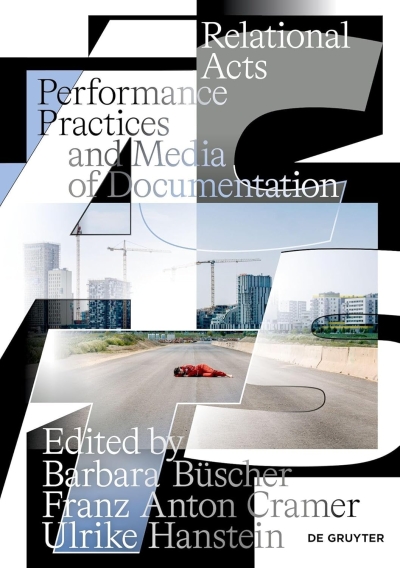
In den Künsten überlagern sich zunehmend ästhetische, dokumentarische und historiografische Verfahren. Relational Acts fragt nach den vielschichtigen Verhältnissen zwischen Aufführungskünsten, Archivprozessen und Ausstellungspraktiken. Die Beiträge des interdisziplinären Bandes untersuchen die Beziehungen, die durch verkörperte Formen der Überlieferung, durch medientechnische Verfahren der Dokumentation oder durch Prozesse des Aufzeichnens, Auswählens und Präsentierens hergestellt werden. Es geht um Beziehungen zwischen Performances und aneignenden Wiederholungen, zwischen verkörperten Praktiken und technischen Infrastrukturen, zwischen Performer*innen und Dokumentarist*innen sowie zwischen Performance- und Mediengeschichte.
Performance-Praktiken und ihre Dokumentation werden als wissensbildende kollaborative Handlungsräume erschlossen. Die Autor*innen aus Kunst und Wissenschaft schreiben über Materialien, Medien und Konzepte des Dokumentierens. Damit tragen sie zu einem medientheoretischen Diskurs über Gegenwartskunst bei.
- Internationale Perspektive auf performancebasierte Arbeiten mit Bezugnahmen auf aktuelle Ausstellungsprojekte.
- Verknüpfung von ästhetischen, historiografischen, kuratorischen und konservatorischen Perspektiven auf Performancekunst
- Beitrag zur aktuellen Debatte über Archiv und Performance.
Information zu Autoren / Herausgebern
Ulrike Hanstein ist Professorin für Kunst- und Medienwissenschaften an der Kunstuniversität Linz und leitet das VALIE EXPORT Center _ Forschungszentrum für Medien- und Performancekunst.
Barbara Büscher ist Professorin für Medientheorie/Intermedialität und lehrte bis zu ihrem Ruhestand an der Hochschule für Musik und Theater Leipzig. Dort leitet sie aktuell – gemeinsam mit Franz Anton Cramer – das Forschungsprojekt „Subverting archival practices".
Franz Anton Cramer, Tanzwissenschaftler und Philologe, ist Wissenschaftlicher Mitarbeiter im Forschungsprojekt „Subverting archival practices" an der Hochschule für Musik und Theater Leipzig.
[EN]
Aesthetic, documentary and historiographical processes are intertwined increasingly in the arts. Relational Acts explores the complex relationships between performance arts, archival processes, and exhibition practices. The contributions to this interdisciplinary volume examine the relationships established via embodied forms of transmission, media-technical methods of documentation, or processes of recording, selection and presentation. The subject is the relationships between performances and appropriative repetitions, between embodied practices and technical infrastructures, between performers and documentarists, and between performance and media history.
Performance practices and their documentation are explored as knowledge-creating, collaborative spheres of action. The authors from the fields of art and science write about the materials, media and concepts of documentation. In doing so, they contribute to a media-theoretical discourse on contemporary art.
VERANSTALTUNGEN
[DE]
Die internationale Konferenz Digital Archivables, Artistic Data and Curated Forms of Presentation: Archival Practices in the Performance-based Arts stellt Fragen nach digitalen Infra-Strukturen und Arbeitsweisen im Kontext neuer (selbstorganisierter, community- and artist-driven) Archivpraxen ins Zentrum. Das Internet als Arbeitsraum für künstlerische und kuratorische Projekte ist weithin dominiert von den Plattformen der Tech-Konzerne und kommerzieller Software-Lösungen, deren kritische Hinterfragung im Lichte der aktuellen politischen Entwicklungen dringlicher geworden ist. Gerade für nicht-institutionelle Archiv-Initiativen sind bestehende technische/digitale Tools eine essentielle Voraussetzung, weil eigene Entwicklung entweder nicht möglich ist, zu teuer wären oder weil die Datensätze nicht interoperabel sind. Welche Alternativen sind entwickelt und benutzbar? Unter welchen Bedingungen?
Die Konferenz bringt Akteur*innen, Künstler*innen und Kurator*innen von sechs Projekten, die ihre Archivprozesse online betreiben, ins Gespräch mit Expert*innen aus den Bereichen nutzerorientierter Medienforschungen.
Mit: Juana Awad, Dušan Barok, Sarah Bergh, Nanna Bonde Thylstrup, Barbara Büscher, Sandra Chatterjee, Anna Chwialkowska, Birgitta Coers, Franz Anton Cramer, Ulrike Hanstein, Olivia Jaques, Bettina Knaup, Melissa Köhler, Isabella Krayer, Jan Kryszons, Saskia Mattern, Shusha Niederberger, Birk Schindler, Marlies Surtmann, Jasmina Založnik
Anmeldung: archiv@documenta.de
Das Forschungsprojekt „Subverting Archival Practices. Unfolding diversity in the historiography of performance-based arts“ adressiert Akteur*innen und Initiativen aus den Feldern Tanz, Aktivismus, Kuratieren und Performance Art. Archivische Dokumentation, Auf/Bewahrung und Präsentation der von ihnen generierten Materialien erfolgt fast durchgehend im digitalen Raum, gelegentlich begleitet von Sammlungen physischer Objekte, diese zumeist in den privaten Räumen der Akteur*innen. Das Verhältnis dieser beiden Sphären zueinander sowie zu institutionellen Räumen ist maßgeblich für die Frage nach der Bewahrung, Beglaubigung und Zugänglichkeit des Materials. Das Forschungsprojekt fragt nach den infra-strukturellen Bedingungen, unter denen Datenhosting, kuratorische Agency, visuelle Darstellung und Zugang möglich sind und entwickelt werden sollen.
Das Projekt wird an der Hochschule für Musik und Theater Leipzig von Prof. Dr. Barbara Büscher und Dr. Franz Anton Cramer durchgeführt und von der VolkswagenStiftung gefördert.
Konferenz-Konzept: Barbara Büscher, Birgitta Coers, Franz Anton Cramer
♦ ♦ ♦ ♦ ♦ ♦ ♦ ♦
[EN]
The international conference “Digital Archivables, Artistic Data and Curated Forms of Presentation: Archival Practices in the Performance-based Arts”will focus on questions of digital infrastructure and working methods in the context of self-organized community- and artist-driven archival practices. However, the internet as a workspace for artistic and curatorial projects is largely dominated by the platforms and software solutions of commercial tech companies and the power structures they implement through their algorithms and content management templates. In light of current political developments, these urgently need to be challenged. Non-institutional archival initiatives generally do not have the means to develop their own tools and infra-structures due to cost or interoperability issues or manpower and expertise. But which alternatives are available? And under which conditions?
The conference is dialogic and invites representatives of six initiatives — CHAKKARs, performatorium, Akademie der Künste der Welt, Non-Aligned Dance Archive, re.act.feminism, touching margins — to present and discuss their working methods with experts and activists.
With: Juana Awad, Dušan Barok, Sarah Bergh, Nanna Bonde Thylstrup, Barbara Büscher, Sandra Chatterjee, Anna Chwialkowska, Birgitta Coers, Franz Anton Cramer, Ulrike Hanstein, Olivia Jaques, Bettina Knaup, Melissa Köhler, Isabella Krayer, Jan Kryszons, Saskia Mattern, Shusha Niederberger, Birk Schindler, Marlies Surtmann, Jasmina Založnik
Registration required at archiv@documenta.de
The research project “Subverting Archival Practices. Unfolding diversity in the historiography of performance-based arts” addresses individuals and initiatives in the field of dance, activism, curation and performance. Besides artistic studio work and various discursive formations, they operate in the digital realm for documenting, preserving/storing, and presenting material which has emerged from their respective practices. The relationship between the digital and the physical (and often private) realm, and between these and the institutional sphere, crucially impacts how the material is preserved, authenticated and made accessible. The project examines the infrastructural conditions under which data hosting, curatorial agency, visual representation and accessibility are possible.
The project is being conducted by Prof Dr Barbara Büscher and Dr Franz Anton Cramer at the University of Music and Theater Leipzig and is funded by VolkswagenStiftung.
Conference concept: Barbara Büscher, Birgitta Coers, Franz Anton Cramer
More Info
Im kuratorischen und künstlerischen Handeln werden relevante Wissensbestände generiert, die aber aufgrund der Kurzlebigkeit und Vorläufigkeit letztlich ebenso ephemer bleiben wie die Gegenstände selbst (Performances, Ausstellungen, Prozesse, Aufführungen), wie zuletzt in Networks of Care (Schäffler, Schäfer, Buurman 2022) beschrieben.
In dem Workshop möchten wir mit Gästen aus Projekten, Institutionen und Wissenschaft über minimale Strukturen der Vernetzung und Verstetigung von Initiativen zur Bewahrung von performativem Wissen aus kuratorischer und künstlerischer Praxis nachdenken. Wie könnte eine außer-institutionelle Langlebigkeit gepflegt werden, die gleichzeitig flexible Verbindungen zu bestehenden Bildungs-Institutionen ermöglicht?
Welche Vorstellungen von ›Archiv als Daseinsvorsorge‹, als essentieller Infra-Struktur, als eine Art Cultural Common sind bisher sichtbar geworden und werden wo thematisiert? Mit welchen Argumenten und wer könnten dafür die Adressat:innen sein?
Sind daraus Forderungen ableitbar an künftige Struktur- und Fördermaßnahmen, auch angesichts der aktuellen Kürzungen und kulturpolitischen Verschiebungen?
Konzeption und Moderation: Barbara Büscher, Franz Anton Cramer, Anna Schäffler
Mit: Daria Bona (Kunsthistorikerin/Kuratorin, Artist meets Archive/Internationale Photoszene Köln), Jenny Dirksen (Kunsthistorikerin/Kuratorin, Archiv der Sozialen Künstlerförderung des Stadtmuseum Berlin), Lukas Fuchsgruber (Kunsthistoriker, Manager Digitales Kulturerbe bei Wikimedia Deutschland), Monika Kerkmann (Kunsthistorikerin/Kuratorin, eh. Geschäftsführerin der ADKDW Köln), Bettina Knaup (Kuratorin, re.act.feminism), Melissa Köhler (Restauratorin, documenta archiv), Friederike Kramer (UdK Berlin, Leitung Digitale Dienste und Open Access), Tabea Lurk (Kunsthistorikerin, Leiterin der Mediathek, HKB Basel), Annette Maechtel (Kulturwissenschaftlerin/Kuratorin, Geschäftsführerin nGbK Berlin), Sarah Reimann (Dramaturgin, HAU Hebbel am Ufer: HAU4 – digitale Bühne), David Rittershaus (Leitung der Forschungsgruppe Motion Bank, HS Mainz), Anna Wondrak (Kunsthistorikerin, Leiterin des Künstler:innen-Archivs der Stiftung Kunstfonds)
Workshop-Programm zum Download
PROJEKTLEITUNG & KONTAKT
Barbara Büscher and Franz Anton Cramer have cooperated since 2006, formulating questions and developing methods and formats to interweave their individual disciplinary perspectives: media studies, performance studies; dance studies, archival theory and philology, respectively. Since 2009, in cooperation with scholars, curators and artists, they have regularly published the online journal MAP media | archive | performance (www.perfomap.de). The journal’s contributors come from various academic and artistic disciplines and their articles are seen as an important contribution to research in the field. The use of digital, freely accessible forms of publication has always been a vital element of our strictly inter- and transdisciplinary research and publishing activity. Recent publications include:
- Bewegen, Aufzeichnen, Aufheben, Ausstellen: Archivprozesse der Aufführungskünste. Ein Arbeitsbuch. Leipzig: Qucosa 2021; DOI: https://doi.org/10.25366/2022.2. (Barbara Büscher and Franz Anton Cramer).
- Barbara Büscher 2023. „Books as Archive of Performance Art and Source Material of Its History“ In Reconstructing Performance Art. Tancredi Gusman (ed.).
- Materialities in Dance and Performance: Writing, Documenting, Archiving. 2024. Bielefeld: transcript (Franz Anton Cramer, and Gabriele Klein, eds.).
- Franz Anton Cramer 2024. „Written Artefacts in Performance, Writing as Performance: Origination and Dissemination”. manuscriptcultures 21, 224–232.
- Barbara Büscher 2025. „Performance art in the museum since the 2000s: Key issues, curatorial decisions, exhibition constellations“ In Arabeschi. International journal of studies on literature and visuality, no. 25.
- Relational Acts. Performance Practices and Media of Documentation. Berlin: De Gruyter (forthcoming). (Barbara Büscher, Franz Anton Cramer, and Ulrike Hanstein, eds.).
Prof. Dr. habil. Barbara Büscher: barbara.buescher@hmt-leipzig.de
Dr. Franz Anton Cramer: franz-anton.cramer@hmt-leipzig.de
Research project funded by VolkswagenStiftung funding line Open Up — New Research Spaces for the Humanities and Cultural Studies (2025/2026)
Forschungsprojekt gefördert durch die VolkswagenStiftung im Programm Aufbruch — Neue Räume für die Geistes- und Kulturwissenschaften (2025/2026)