10. Newsletter Datenbank CARLA der HMT Leipzig
Dear readers interested in the CARLA database of the University of Music and Theatre Leipzig,
it has been a while since we last sent you a newsletter. In the meantime, some particularly exciting things have happened, which we would like to tell you about today.
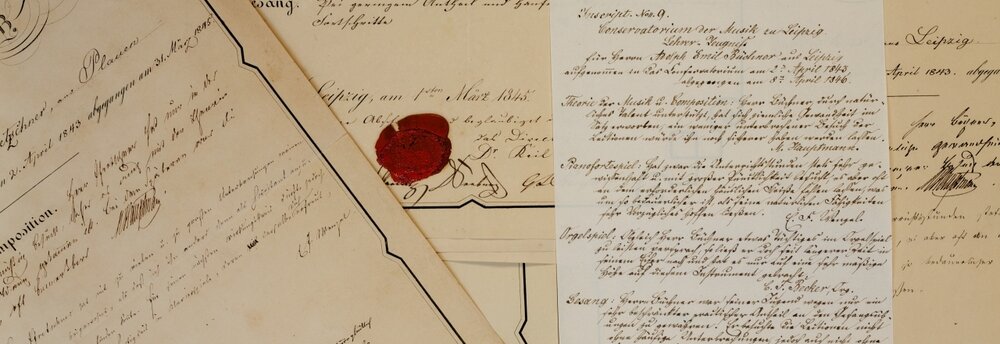
Transcriptions of study documents on Wikisource
As reported in the last newsletter, we have been using Wikisource since April this year to create transcriptions of students' inscriptions and certificates.
All documents relating to some selected individuals have already been fully transcribed. One example are the documents relating to the Lithuanian painter and composer Mikalojus Konstantinas Čiurlionis.
In addition, transcriptions for individual pages from inscription and certificate volumes that were already created by the library and archive team during the coronavirus lockdown in 2020 are being entered. New transcriptions are also being created by student assistants and corrected by the CARLA team.
For this year's Long Night of Science on 21 June, we held a transcription workshop using documents from CARLA. From 5 to 8 p.m., participants were introduced to CARLA, Kurrent script and the creation of transcriptions every hour. Afterwards, with the support of the CARLA team, they were able to get started with their transcriptions. The results have already been added to Wikisource.
You too can support CARLA by creating transcriptions!
To participate, it is best to create an account via Wikisource:Registration. Before participating, please read our editing guidelines. You can then open pages from the inscription and certificate volumes and transcribe them or proofread transcriptions. You can show your interest and express any questions or suggestions you may have by leaving a comment on the project's discussion page.
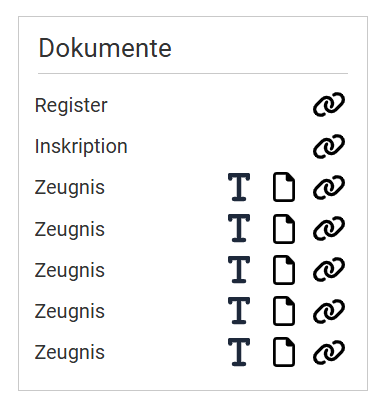
CARLA now shows whether transcripts are already available for linked study documents. Clicking on the ‘T’ will take you directly to the transcript of the document on Wikisource.
CARLA on Tour: Reports from Bremen and Salzburg
In our last newsletter, we announced a short CARLA tour, which we would now like to report on.
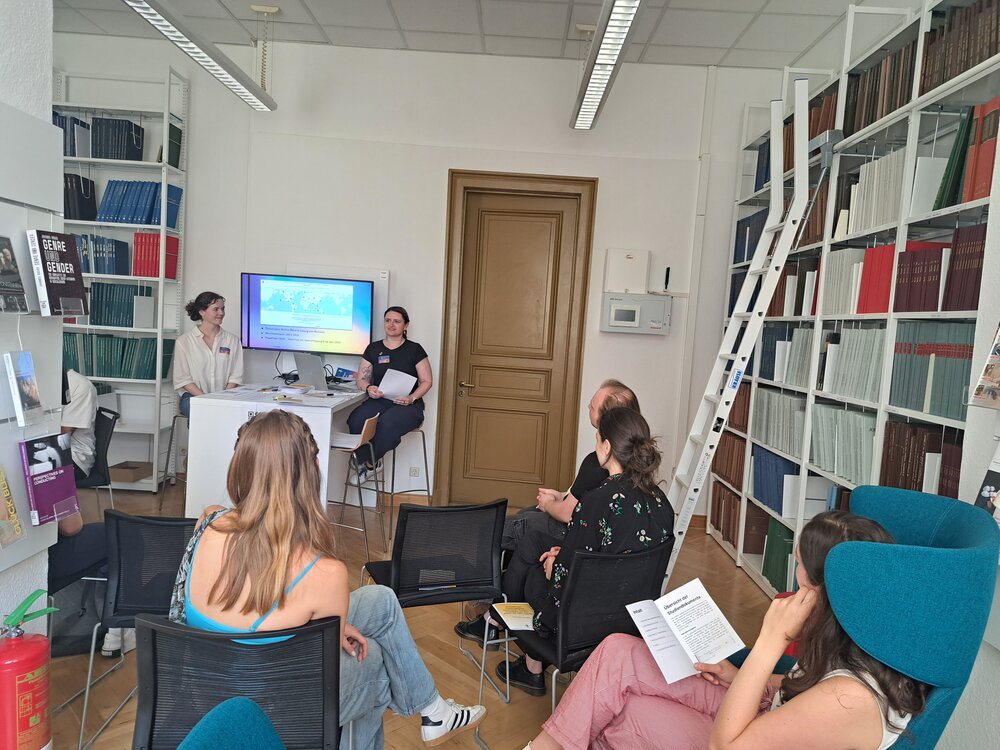
It began on 26 June at the ‚Bibliothekskongress‘ in Bremen. We had the opportunity to present CARLA to an audience of experts from all over Germany and answer questions from interested parties. You can view the slides from the presentation here.
CARLA then travelled to Salzburg for the international IAML conference. On 9 July, we presented CARLA to colleagues from all over the world and networked with them during the conference.
We are delighted that we were able to introduce CARLA to a large audience at both conferences. And CARLA's tour did not end there.
CARLA now award-winning! : SaxFDM Conference and Open Data Award
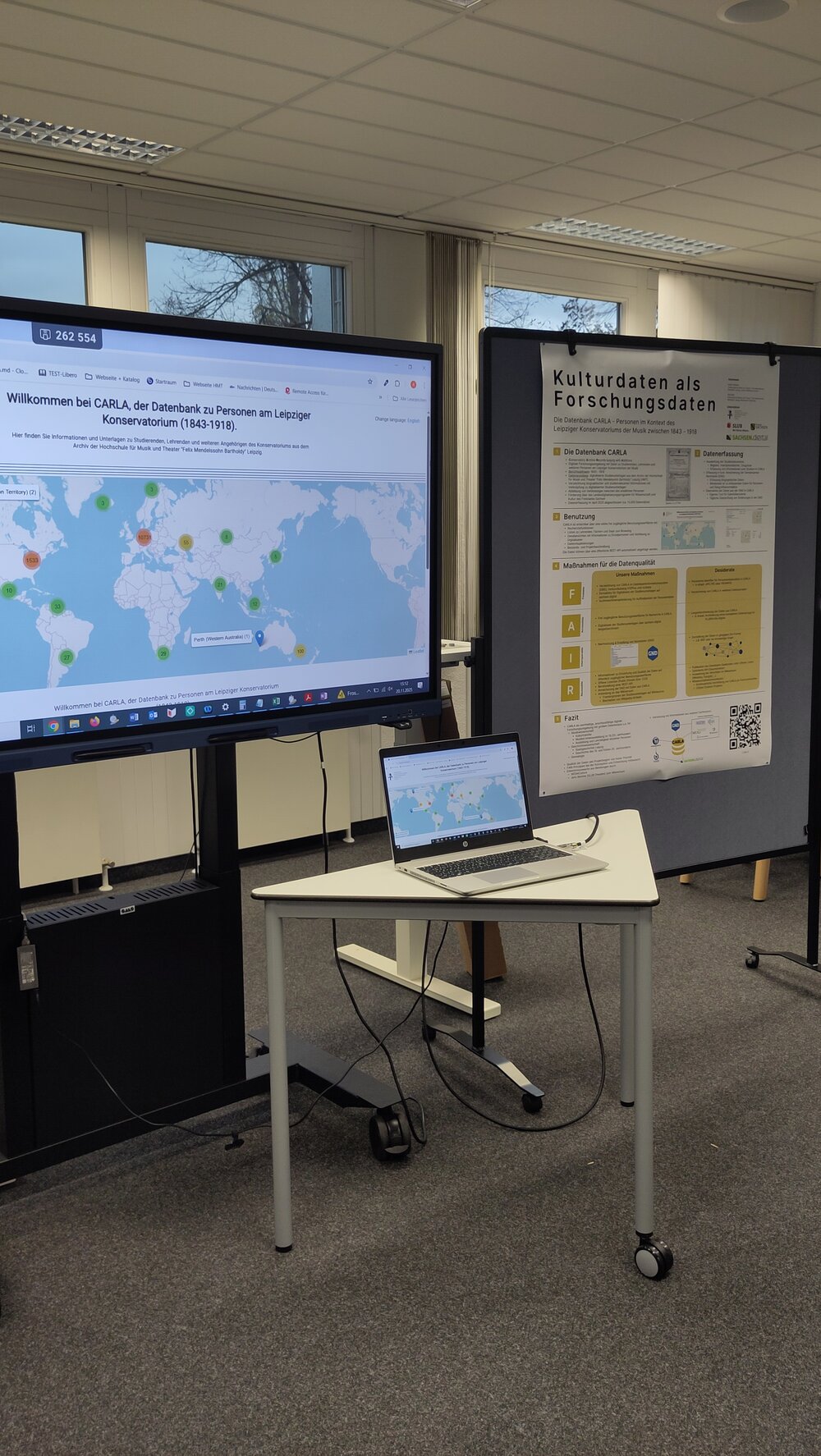
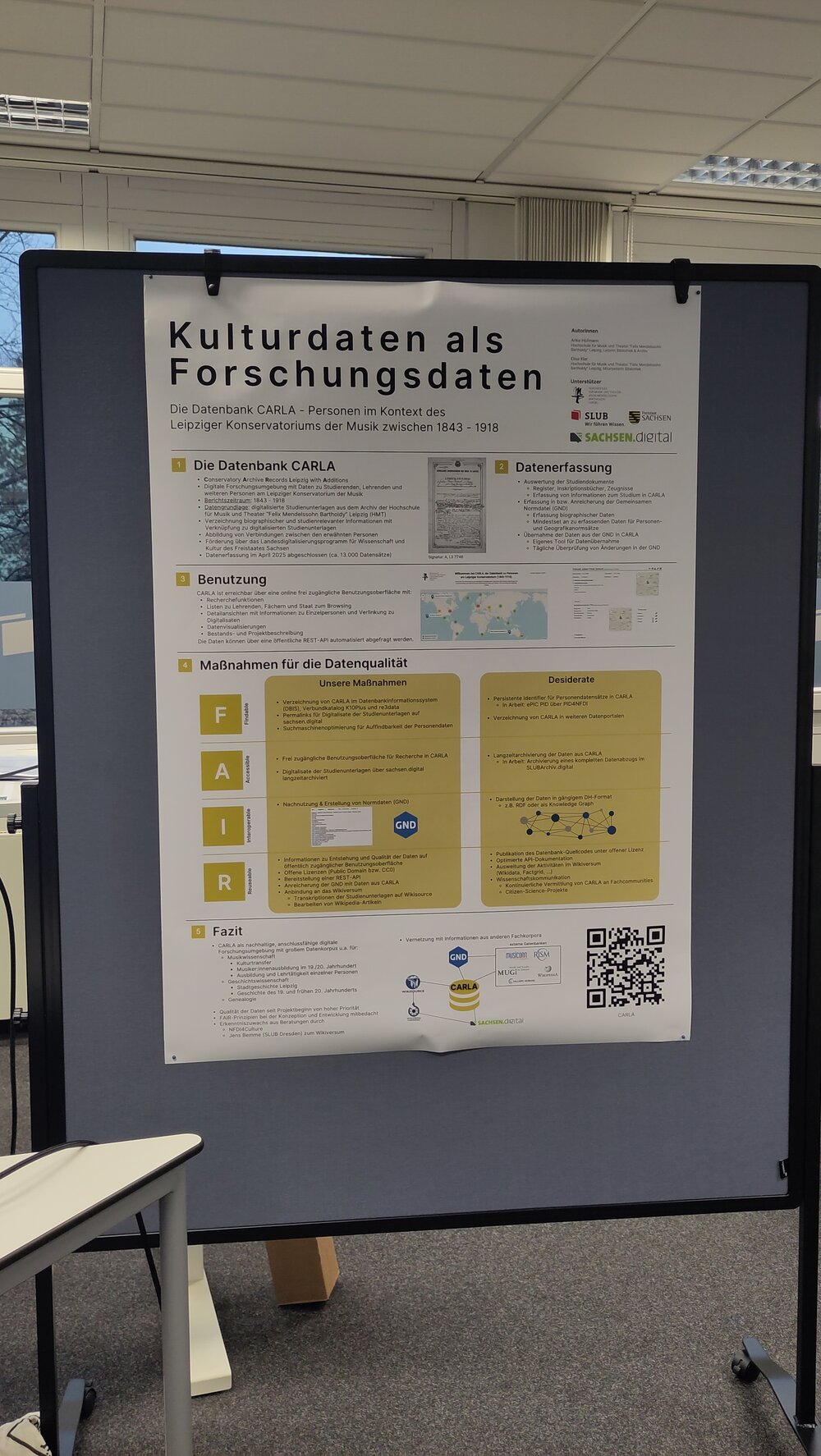
Two weeks ago, we presented CARLA at the SaxFDM Conference in two poster sessions.
The annual conference of the SaxFDM initiative focuses on FAIR research data management (RDM), this year under the motto ‘Sharing data, gaining knowledge: research data management between vision and reality’. During the two days of the event at SLUB Dresden, RDM success stories were reported, approaches for integrating RDM into teaching were explored, and attempts were made to gauge how research data management, machine learning and artificial intelligence influence each other. In addition, the future of the Saxon state initiative SaxFDM and its needs, successes and development potential were discussed.
At the conference, we demonstrated that cultural data can also be FAIR, i.e. findable, accessible, interoperable and reusable, and explained how we are implementing this in CARLA and what steps we still want to take. We also used the conference, and the poster session in particular, to network with other projects and institutions.
The rest of the conference programme was packed with interesting keynote speeches, workshops and a panel discussion, during which we were able to gather lots of ideas for the CARLA data.
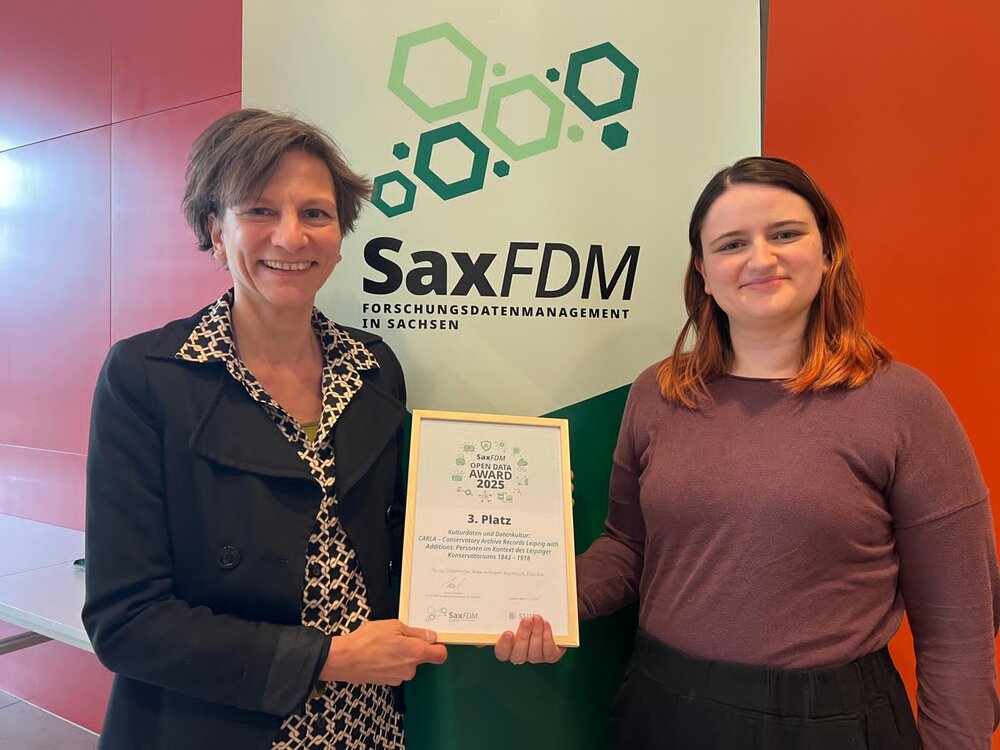
At the end of the conference, the SaxFDM Open Data Award was presented and CARLA was one of the winners.
The Open Data Award jury awarded the project team third prize!
In its laudatory speech, the jury particularly praised the scientific relevance of the project, which goes far beyond mere digitisation. CARLA enables ‘different approaches to viewing, researching, participating and thus, in the best sense of the word, exploring’ the historical holdings of the Leipzig Conservatory of Music, the predecessor institution of the HMT. The platform not only provides data, but also opens up new perspectives on institutional, biographical and music-historical contexts.
The openness of the project was also highlighted. CARLA follows the FAIR principles (Findable, Accessible, Interoperable, Reusable) and makes its metadata openly available. Its connection to established platforms – such as the musiconn.performance event database, the Kalliope manuscript portal and the Wikiverse – enhances its scientific value.
The jury was impressed further by the participatory approach, which actively involves citizen science and at the same time promotes data literacy among a broader public. This form of collaborative knowledge production contributes to ‘proactively embedding a significant archive collection into a global knowledge landscape’.
In addition to a certificate, a small symbolic monetary prize for the project is promised. We also had the opportunity to present CARLA to the audience at the award ceremony.
We would like to thank the jury of the SaxFDM Open Data Awards for the prize and the organisers of the SaxFDM conference for the successful days in Dresden. We congratulate all the other winners!
A wrap-up of this year's SaxFDM conference can be found here: https://saxfdm.de/wrapup-2025/
Thank you!
As in every newsletter, we would like to thank you for your continued interest in CARLA.
If you have any further questions or comments about the CARLA database or any of the issues mentioned in this newsletter, please do not hesitate to contact us at carla@hmt-leipzig.de.
We hope you enjoy using the now complete data in CARLA!
PS: To conclude this newsletter, we would like to introduce you to another special student of the Conservatory.
As has already been made clear in previous newsletters, the paths taken by our graduates after completing their studies were not always musical. This was also the case for Carl Rupp Doering.
He was born on 28 June 1889 in Philadelphia, Pennsylvania, and enrolled at the Conservatory in 1911 with the inscription number 11185. His main subject was piano, in which he was taught by Robert Teichmüller. He completed his studies in 1914.
His wife, Antoinette Rupp (née von Eggers), also studied at the Conservatory, but between 1901 and 1906, before her husband (inscription number 8383).
Back in his homeland, he initially continued to devote himself to music and became a piano and music theory teacher at Texas Christian University. His wife was head of the piano department at the same university. (Photos of Mr and Mrs Doering from the Texas Christian University Bulletin)
Later, however, he turned to another discipline, medicine. In 1921, he received his M.D. from Baylor Medical College in Dallas and in 1924, his Doctor of Science degree from the Johns Hopkins School of Hygiene and Public Health in Baltimore, Maryland.
From 1924 to 1950, he worked as a biostatistician at the Harvard School of Public Health. During this time, he discovered and proved the link between heavy smoking and cancer in 1928, together with Dr Herbert L. Lombard.
In 1950, he left Harvard and became a professor of preventive and public health at the University of Oklahoma and director of the training programme at the Institute for Medical Statistics. (Photo by Carl Rupp Doering from this period)
He died on 28 March 1976 in Cambridge, Massachusetts, at the age of 86.
Rupp's study records (inscription number 11185) from our collection:
https://doi.org/10.1093/aje/kwu131
Copyright
University of Music and Theatre „Felix Mendelssohn Bartholdy“ Leipzig
University library
Grassistraße 8
04107 Leipzig
Tel.: 0341/2144-632
Fax: 0341/2144-634
author of the contents of the newsletter:
Elisa Klar
This newsletter is a free service by the archive and library of the University of Music and Theatre „Felix Mendelssohn Bartholdy“ Leipzig. It is only sent to interested readers who subscribed to it.
If you want to unsubscribe, please click here.